
Home / Blog / How to Clean a Flexi Dragon
How to Clean a Flexi Dragon and Fix a Stuck Joint
To clean a flexi dragon, wash it by hand in lukewarm soapy water, scrub the gaps with a soft toothbrush, rinse it and let it air dry. To free a stuck joint, clear out whatever is jammed in the gap, then bend that one joint slowly side to side in small moves until it loosens. Never force it.
That's the whole job in two sentences. The rest of this guide covers the details that keep you from warping the plastic or snapping a segment, plus what to do when paint is the problem.
Why flexi dragon joints get stuck
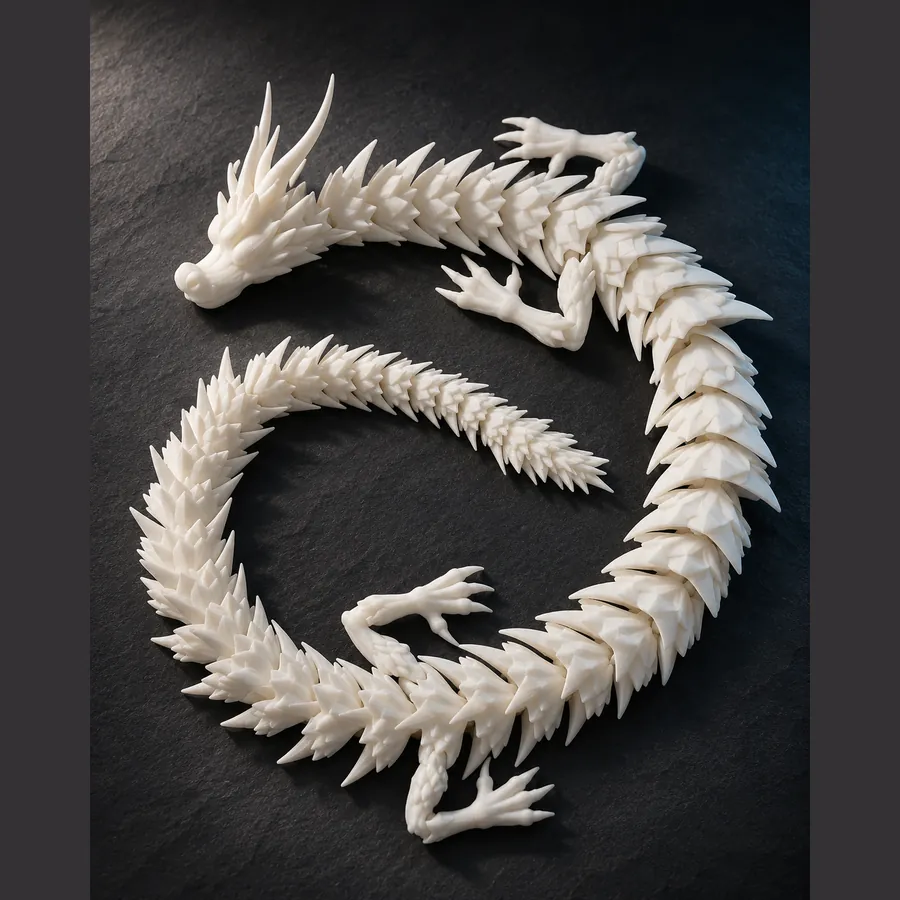
A flexi dragon bends because each segment is printed already linked to the next, with a tiny air gap around the link. Our post on how flexi dragons move explains that gap in more detail. Anything that fills it or changes its shape will make a joint stiff.
The usual causes are:
- Grit. Dust, sand, pocket lint or crumbs work into the gap.
- Sticky stuff. Juice, candy or lotion dries in the joint and acts like glue.
- Paint. A thick coat bridges the gap between two segments.
- Heat. We print in PLA, a plant-based plastic that softens above about 55 °C (130 °F). In a hot car or on a sunny windowsill the segments can sag and press together.
- Just new. A joint can feel snug the first few times it moves.
What you need
- A bowl of lukewarm water, not hot
- A drop of mild dish soap
- A soft toothbrush or a small paintbrush
- A toothpick, for poking grit out of gaps
- A towel or paper towels
Skip anything harsh. Strong solvents, bleach and scouring pads can dull the surface and strip paint off a painted dragon.
How to clean a flexi dragon, step by step
- Shake it out. Hold the dragon over a sink or trash can and wiggle the whole body. Loose grit often falls right out.
- Soak for a few minutes. Drop it in lukewarm water with a little dish soap. This softens anything sticky.
- Brush along the joints. Use the toothbrush on the back and belly, working along each gap. Bend the body gently while you brush so the gaps open up.
- Pick out the stubborn bits. Slide a toothpick into any gap that still feels gritty. Don't pry. Just guide the dirt out.
- Rinse well. Soap left in the joints dries tacky, so rinse under lukewarm running water while you flex the body.
- Air dry. Pat it with a towel, then lay it out straight somewhere at room temperature until it's fully dry. Don't use a hair dryer on a hot setting, and don't leave it in direct sun to speed things up.
How to free a stuck joint
Clean the dragon first. Most stuck joints are really dirty joints. If one still won't move after a wash, work on it by itself:
- Find the exact joint. Bend the body slowly from the neck to the tail and feel for the spot that doesn't give.
- Hold both sides close to the joint. Grip the two segments right next to it, not the head and tail. That keeps the force on the stuck joint and off the others.
- Move it in the direction it's meant to go. Most body joints bend side to side. Push a tiny amount, let go, push the other way.
- Repeat in small moves. Ten small wiggles beat one big push. You should feel it ease a little each time.
- Stop if you hear a crack or feel it flex in a new place. That means the plastic itself is bending, not the joint.
We'd skip oil, grease and sprays. They catch dust and lint, so the joint ends up grittier than before.
When paint is the problem
If you painted your dragon and a joint stopped moving, the paint has almost certainly filled the gap. Let the paint dry completely first. Then run a toothpick or the edge of a thin plastic card along the seam to break the bridge, bend the joint a tiny bit, and score again. An adult with a craft knife can trim a thick bridge, cutting away from the hand.
Next time, keep coats thin and pose the dragon while the paint dries. Our guide to painting a 3D printed dragon walks through that.
Cleaning and joint care at a glance
| Do | Don't |
|---|---|
| Hand wash in lukewarm soapy water | Use the dishwasher or very hot water |
| Brush the gaps with a soft toothbrush | Use bleach, solvents or scouring pads |
| Air dry at room temperature | Dry it with high heat or in hot sun |
| Hold right next to a stuck joint | Pull on the head or tail to straighten it |
| Wiggle in small moves | Force it, twist it sideways or oil it |
If something breaks
Spikes, horns and claws are the thinnest parts, so they're the first to go if a dragon gets dropped or squeezed. A tiny drop of super glue can hold a broken spike back on. A glued body joint, though, won't bend again, so it's only worth gluing if you're happy with that segment staying put.
If your dragon arrives broken, send us a photo within 7 days and we'll reprint it or refund you. You can start that on our return request form.
Quick answers
Can I put a flexi dragon in the dishwasher?
No. Our dragons are printed in PLA, which softens above about 55 °C (130 °F). A dishwasher gets hotter than that and can warp the body and fuse the joints. Wash it by hand in lukewarm soapy water instead.
Should I oil a stiff flexi dragon joint?
It's best not to. Oil and grease catch dust and lint, which makes the joint gritty again. Clean the gap and work the joint gently instead. Most stiff joints loosen with slow side-to-side bending.
How do I fix a joint that paint has glued shut?
Find the gap where the paint has bridged the two segments and score along it with a toothpick or a thin plastic card. Then bend the joint a tiny amount, score again, and repeat. Don't force it in one go.
What if a joint snaps?
If it happens at home, a drop of super glue can hold a broken spike or claw back on, but a glued joint won't bend again. If your dragon arrives broken, send us a photo within 7 days and we'll reprint it or refund you.
Ready for a dragon that bends straight out of the box? The articulated dragon is printed in one piece in four sizes: the $8 4-inch keychain, the $15 8-inch, the $25 12-inch and the $35 16-inch. Add the DIY paint kit for $8 more and it arrives primed white, ready to paint.
Shop the articulated dragon